
Here’s How After School Matters Shows Up
By Mary Ellen Caron, Ph.D. After School Matters CEO
Thousands of young people kicked off their summer vacation this week, ready for a well-earned break from school. While summer should be a time to relax, connect with friends, and enjoy the city, many teens face a tougher reality—uncertainty and the question: What now?
For many young people, summer has long been a time of increased risk—when school-year support systems vanish, safe spaces close their doors, and headlines focus on everything going wrong. Yet, each summer also brings an opportunity: the chance to offer teens meaningful ways to stay engaged, build skills, connect with mentors, and contribute to their communities.
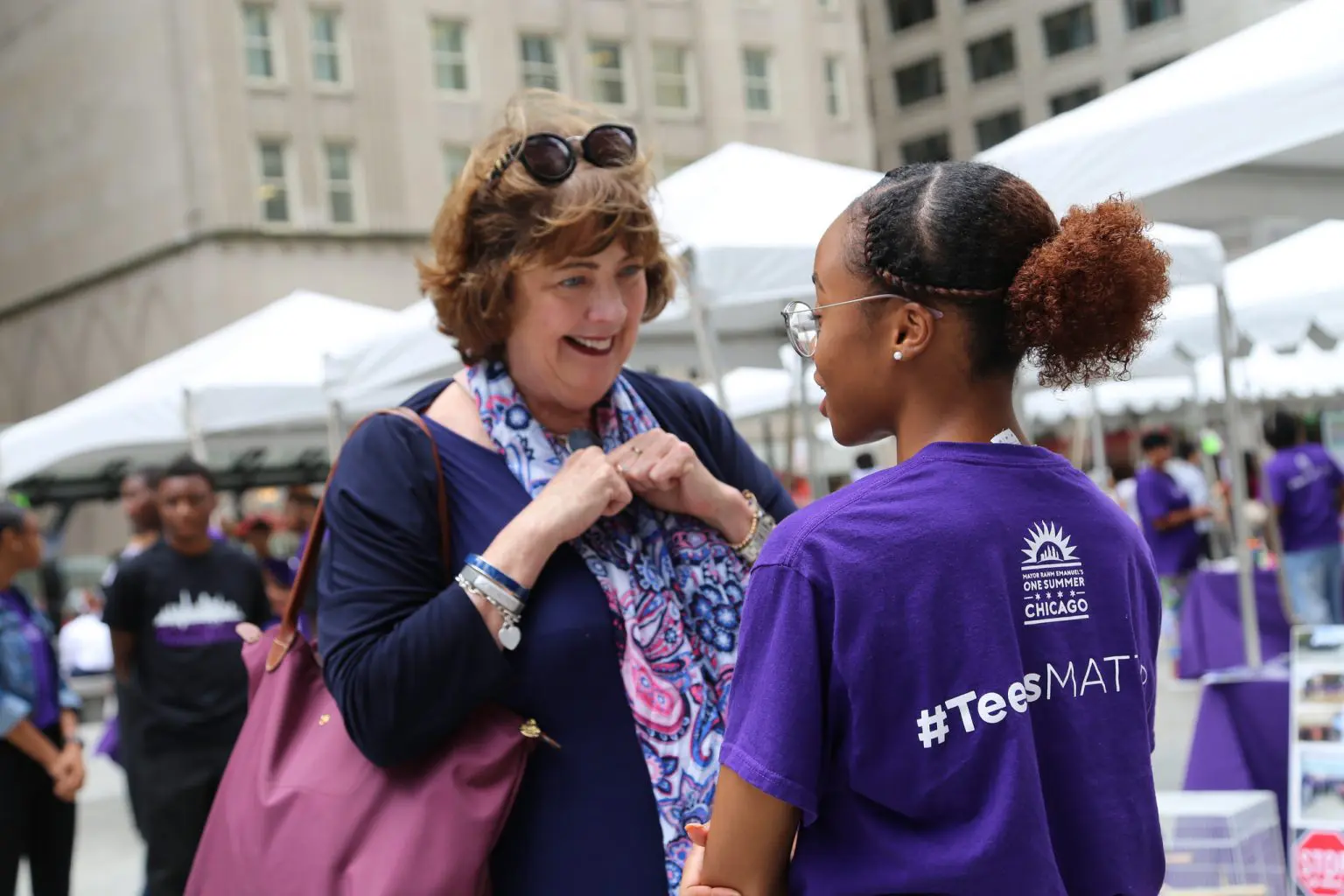
As Chicago’s largest and one of the nation’s leading out-of-school time program providers, we are at the center of this citywide challenge. This summer, more than 10,000 Chicago teens will participate in our hands-on program opportunities, part of the City’s One Summer Chicago initiative. These programs take place across the city at schools, libraries, parks, and community-based organizations, and teens earn money while exploring their interests and growing their sense of purpose.
By partnering with 162 local community-based organizations throughout the year to fund and deliver these programs, we ensure both access and investment reverberate through all of Chicago’s neighborhoods.
Founded by former Chicago First Lady Maggie Daley, we have worked with teens every year since 1991, grounded in a simple but powerful belief: when teens are provided safe, enriching outlets to do something productive, they will choose that path. And when they do, the benefits ripple outward—to families, neighborhoods, and the entire city. That domino effect—invest in teens so they can invest in their communities—is at the heart of what drives this mission. And, this is my life’s work.
Across Chicago, teens learn to collaborate, solve problems, and express themselves—whether they’re building apps, choreographing dances, designing clothes, or practicing culinary skills. They’re building the very skills employers say matter most—and that so many young people today have fewer chances to practice.
Soft skills like communication, time management, adaptability, and teamwork are essential, but increasingly hard to come by. According to Deloitte Insights, 92 percent of companies recognize that human capabilities, or soft skills, are just as important as, or more important than, hard skills in today’s business environment.
Technology has changed how teens (and adults) interact. Face-to-face socializing has dropped dramatically, leaving fewer opportunities to practice real-time communication, conflict resolution, and collaboration.
These aren’t just career skills—they’re life skills. And like any skill, they require repetition and real-life experience to grow.
Whether coding software or welding a sculpture, teens in programs like ours are expected to show up, contribute, and stretch beyond their comfort zones: all critically valuable expectations for our next generation to be taking on.
We’ve learned that teens also thrive when they feel connected. Nationally, and in Chicago, teen mental health remains an urgent concern. Nearly 4 in 10 CPS students reported persistent feelings of sadness or hopelessness over the past year. By contrast, teens in our programs report a stronger sense of belonging and connection and also report higher levels of well-being and hope for the future. In our own evaluations, teens consistently report increases in connectedness, confidence, and willingness to try something new.
That’s the power of program spaces where teens are fully engaged—often in cell phone-free environments, not because of restrictions, but because they’re too busy dancing, designing, coding, cooking, or recording music to check their screens. They’re discovering their strengths by doing.
And they’re rewriting the summer story. Too often, this season is defined by fear and negative assumptions about teens. But the truth is: Chicago’s young people are talented, curious, and full of potential. They just need the chance to explore and discover their talents.
Two recent participants shared the impact in their own words. “I joined this program when I was 14 and had no experience in jazz,” one teen said. “Over four years, I learned how to collaborate and move past disagreements. I ended up winning auditions for programs like Ravinia Jazz Scholars.”
Another teen shared: “I lost all my social skills during the pandemic. This program helped me come out of my shell and discover my love for baking. I’ll be attending Kendall College this fall to become a pastry chef.”
Investing in teens isn’t just about keeping them busy or safe—it’s about preparing the next generation of leaders, workers, and neighbors. It’s about investing in Chicago’s future.
Soft skills may be hard to measure—but their impact is easy to see. Let’s make sure every young person has the chance to build them this summer and in the future.
You can support our teens this summer by:
- Following us on social media (@afterschoolmatters) and sharing our teen highlights with friends and family.
- Donating to support our young people and their programs.
- Visiting our TEENMADE shop to purchase teen artwork or attend our Alumni event.
Thank you for standing with our youth and supporting our teens this summer, showing them that they matter.